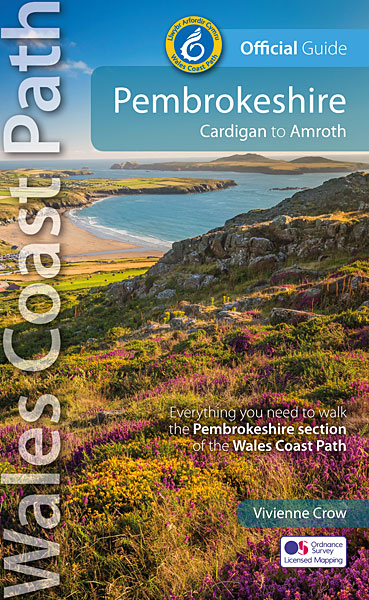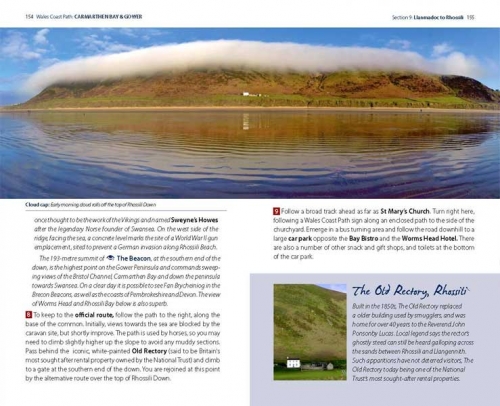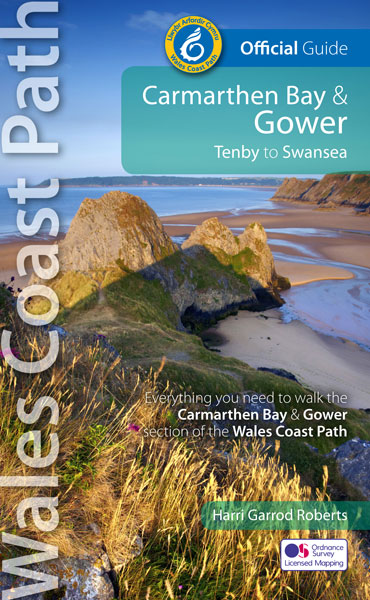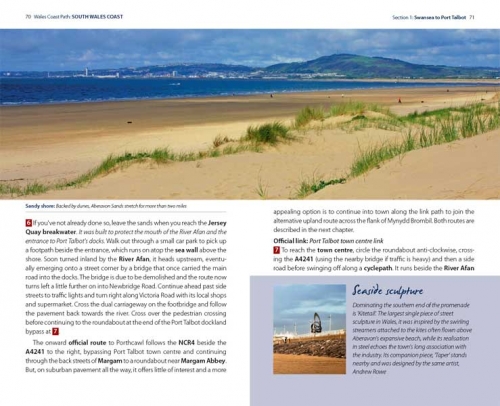

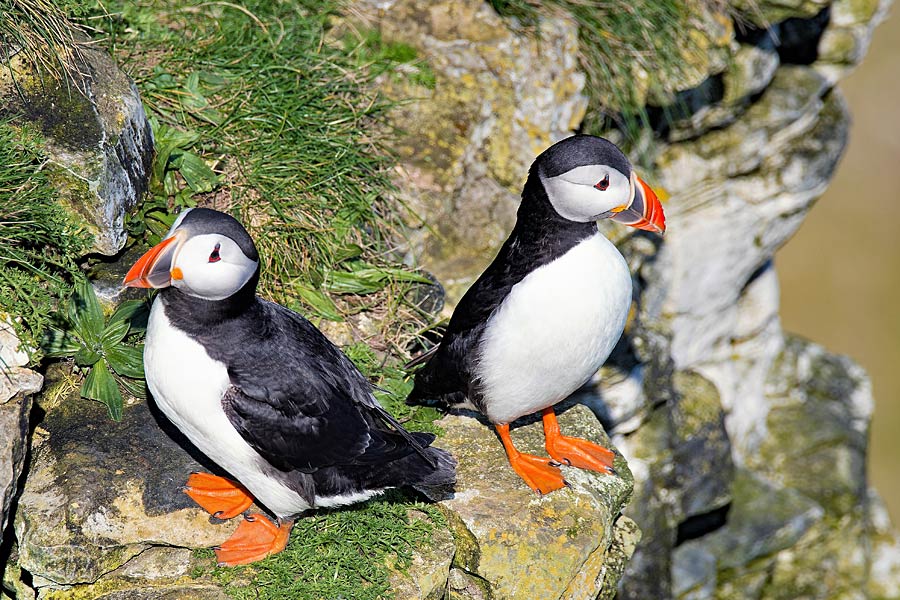
Puffins are a favourite feature of the Wales Coast Path
Best places to see puffins on the Wales Coast Path? Tony Bowerman explains where and when to go …
Best places to see puffins in Wales
THE WALES COAST PATH OFFERS SOOME OF THE BEST PUFFIN-WATCHING in the UK, with a good chance of amazing close encounters and photo opportunities.
Puffins arrive in the UK by mid-April, with the peak viewing period from May to early July, particularly the first three weeks of June when adults are actively feeding chicks. By late July, birds begin departing, and all have left by the first weeks of August.
Mainland Puffin Locations
There are several excellent puffin watching locations along the Wales Coast Path, on both the Welsh mainland and the offshore islands.
Standout mainland puffin viewing locations include South Stack Cliffs RSPB Reserve on Anglesey, where dramatic cliff-top vistas and nest-cams give fascinating close-ups of puffins nesting alongside guillemots and razorbills from May to July. The reserve hosts a small puffin colony of around 100–200 breeding pairs.
Other key mainland puffin breeding sites include St David’s Head, Pembrokeshire where a small colony is visible from the Pembrokeshire Coastal Path.
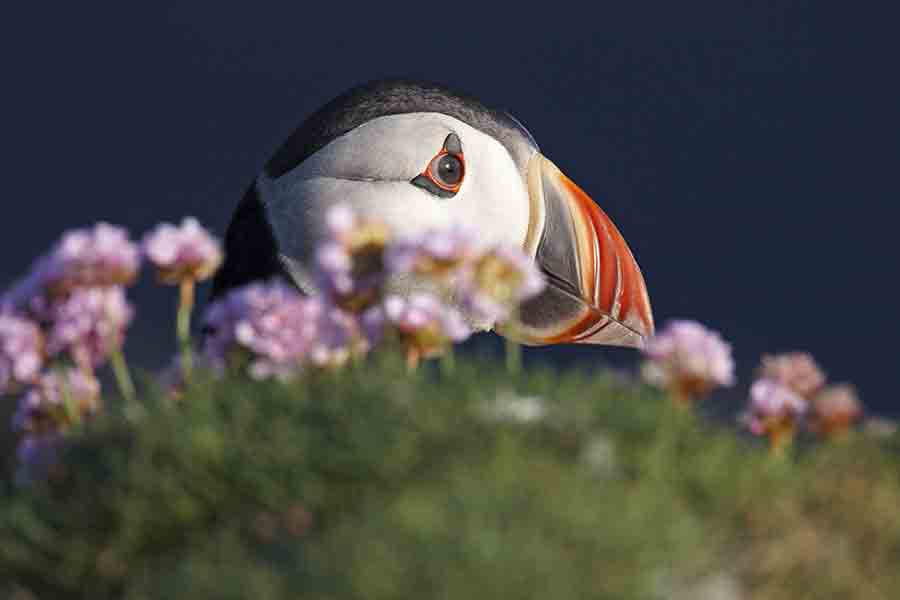
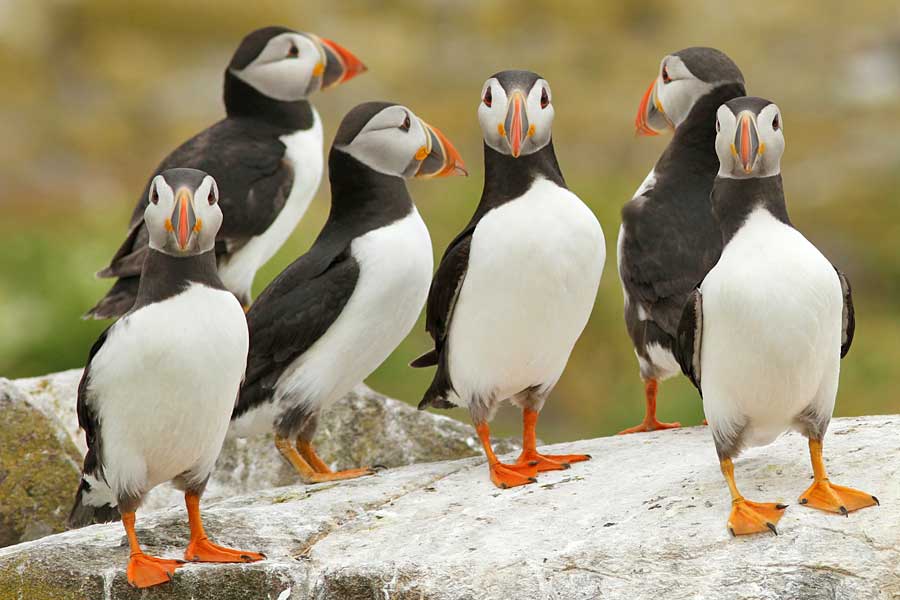
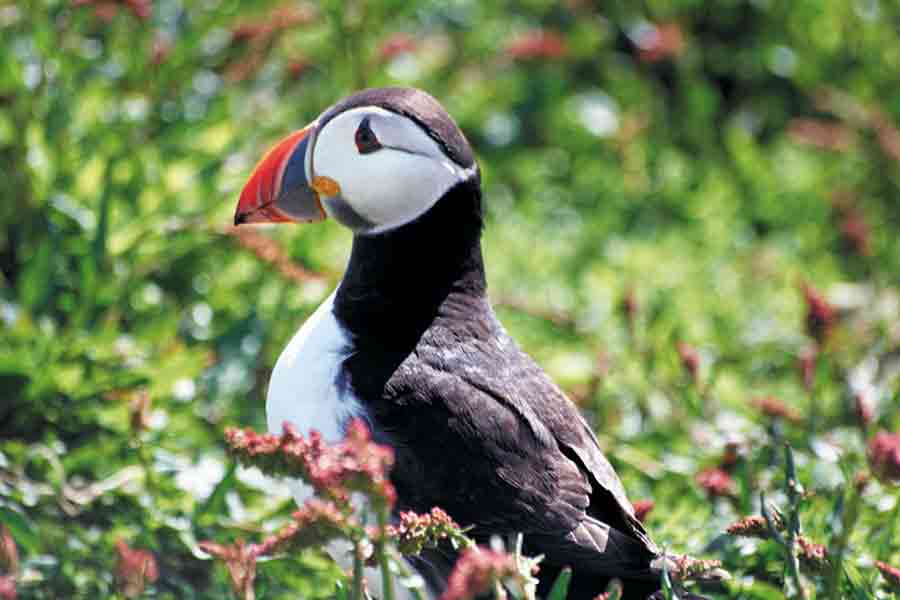
Offshore puffin locations
But it’s the offshore Pembrokeshire islands that stand out as the premier puffin watching destination.
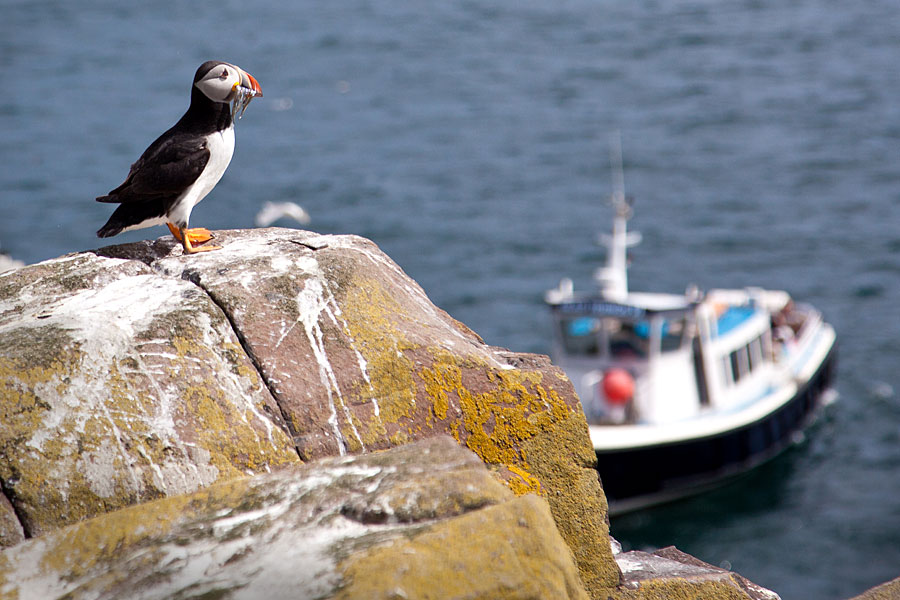
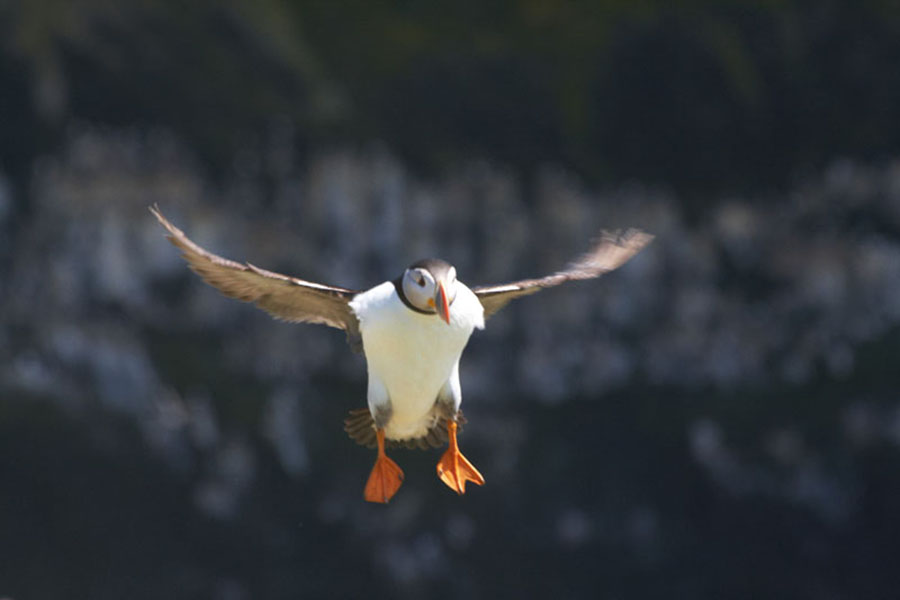
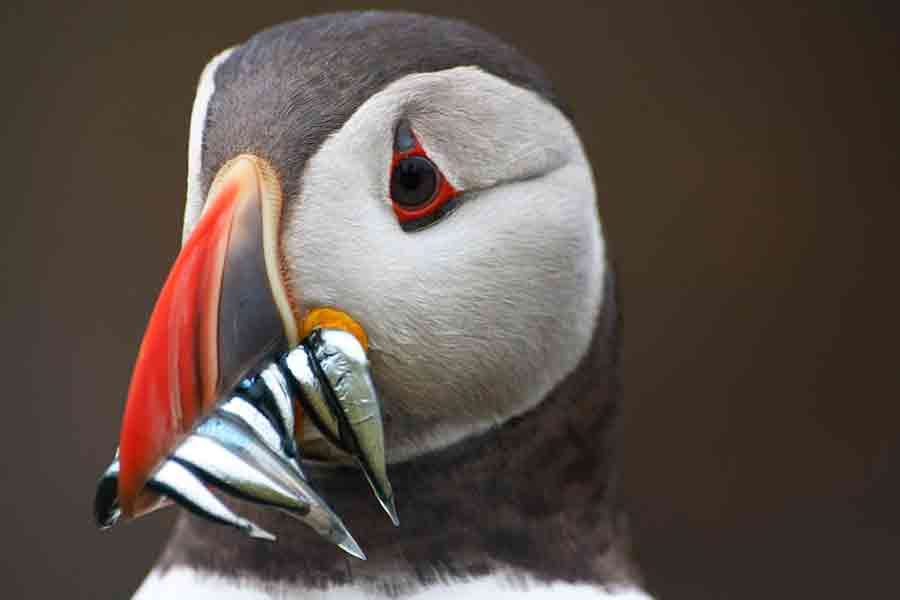
Skomer Island is undoubtedly the star attraction, hosting over 52,000 puffins in 2026—a record-breaking count that bucks the global decline trend. This uninhabited island lies roughly a mile off the Pembrokeshire coast near Martin’s Haven, accessible by boat from April to August. The Wildlife Trust of South and West Wales runs regular day trips, with boats departing every 30 minutes between 10:00 and 12:00 during peak season. Birds nest in old rabbit burrows, often right beside the path. The sights and sounds are incredible, with birds moving in and out from the sea all day long. Overnight stays are also available for a still more immersive experience.
Skokholm Island, visible from Skomer, hosts a smaller but still significant puffin colony of around 2,500 breeding pairs (approximately 12,000 individuals). The island offers a quieter, more restricted experience compared to Skomer. Boat trips are available from Martin’s Haven, and overnight stays can be arranged, though Skomer remains the better option for dedicated puffin watching.
Smaller still, Puffin Island off Penmon, on the north-east tip of Anglesey, is historically significant but now hosts only a handful of breeding puffins, though it remains home to more than 750 pairs of cormorants. Boat cruises with operators like Seacoast Safaris, RibRide, or Starida from April to July offer the best chance to spot the puffins and cormorants alongside guillemots, razorbills, and terns
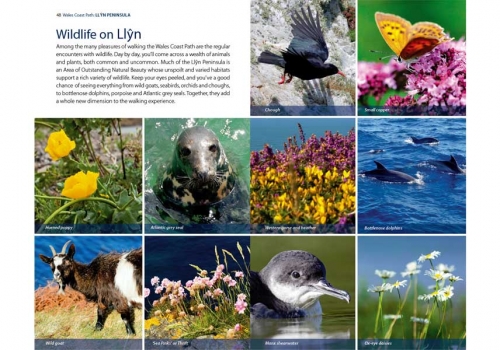
Bardsey Island and the Ynysoedd Gwylan (Gull Islands) off Aberdaron also support nesting puffin colonies, though access is more limited.
But it’s the offshore Pembrokeshire islands that stand out as the premier puffin watching destination.
Essential puffin viewing kit
- Binoculars (8×42 or 10×42 recommended) for distant viewing from cliffs
- Waterproof jacket and layers—coastal weather changes rapidly
- Sturdy walking boots with good grip for uneven, often slippery paths
- Camera with telephoto lens (200mm+) for close-up shots
- Sun protection—hat, sunscreen, and sunglasses (cliff tops offer little shade)
- Water and snacks—facilities are limited on islands
- Booking confirmation—Skomer trips must be pre-booked, especially in peak season

Tony Bowerman
This article was written by Tony Bowerman, and appears here for the first time. (C) Copyright Tony Bowerman 2026. All rights reserved.
Tony Bowerman is a director of Northern Eye Books Ltd, and loves nature and the outdoors. At one time he contributed articles to several national newspapers and magazines. He later worked as an ‘interpretation consultant’ for clients such as the National Trust, Welsh Water, County Councils and Wildlife Trusts. He is a member of the Outdoor Writers and Photographers Guild.
Contact: tony@northerneyebooks.co.uk
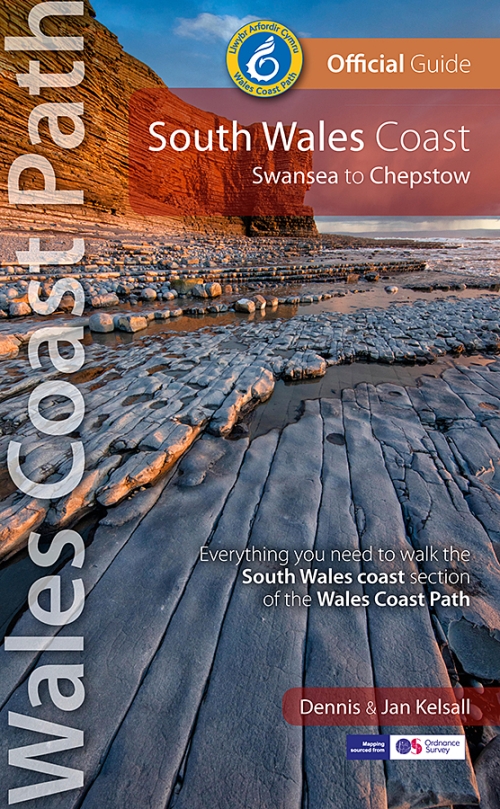
Books and maps for this part of the coast